Projects
Recording and concert projects of the Auner Quartett.
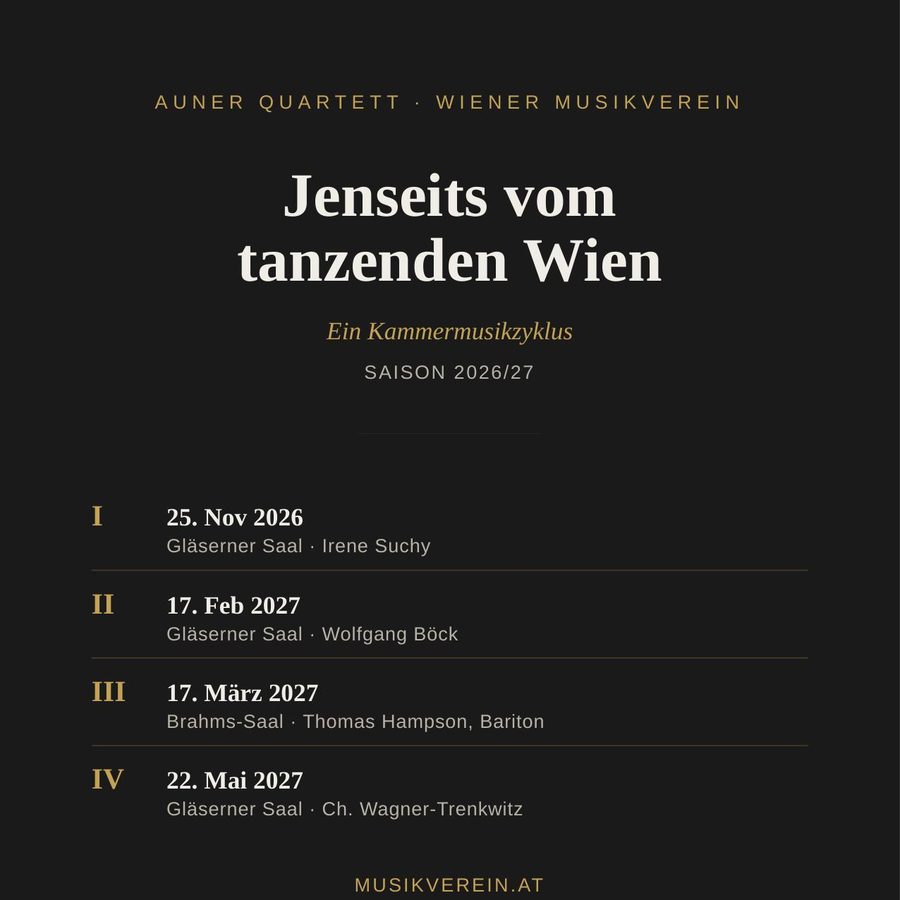
Beyond Dancing Vienna
In 2025, Vienna will celebrate the great waltz composer Johann Strauss, whose immense popularity had a profound impact on musical Vienna, even beyond the dance halls. Not only did the emerging desire of middle class households to enjoy Strauss’ music at home lead to the constant development of new pianos — but “serious” music, insofar as such labels are not perceived as value judgements, was also strongly inspired by the aura of Strauss and the Jewish melodies of the waltzes. The resulting “Viennese sound”, which was celebrated in particular by performers such as Fritz Kreisler with a continuous vibrato on all notes, even led to the omission of the previously customary vibrato markings in the sheet music.
Other Viennese Jewish composers such as Alexander von Zemlinsky, Arnold Schoenberg, and Hugo Wolf from Carinthia are the protagonists of a recording project entitled “Beyond Dancing Vienna,” which, on the one hand, aims to showcase the “here and now” and “dancing Vienna” with its own arrangements for string quartet of Johann Strauss’s “Frühlingsstimmen” Waltz and the “Brennende Liebe” Polka Mazur by Josef Strauss, and on the other hand, with the romantic String Quartet in D major by Arnold Schoenberg, the “Bekenntnis zu Wien” String Quartet in A minor by Fritz Kreisler, the “Italian Serenade” by Hugo Wolf, and the “2 Movements for String Quartet” by Alexander von Zemlinsky, also the “beyond” — the musical echo of the Strauss dynasty.
The recording was made in autumn 2025 and is currently in production. It contains string quartets by Arnold Schönberg, Fritz Kreisler and Johann Strauss as well as a quintet by Erich Wolfgang Korngold.
The next CD production is already planned: the complete recording of all four string quartets by Mary Dickenson-Auner. A cooperation with the Exilarte Center of the mdw, which is particularly devoted to these composers, is in preparation. Marco Battistella has been engaged as artistic partner and recording producer.
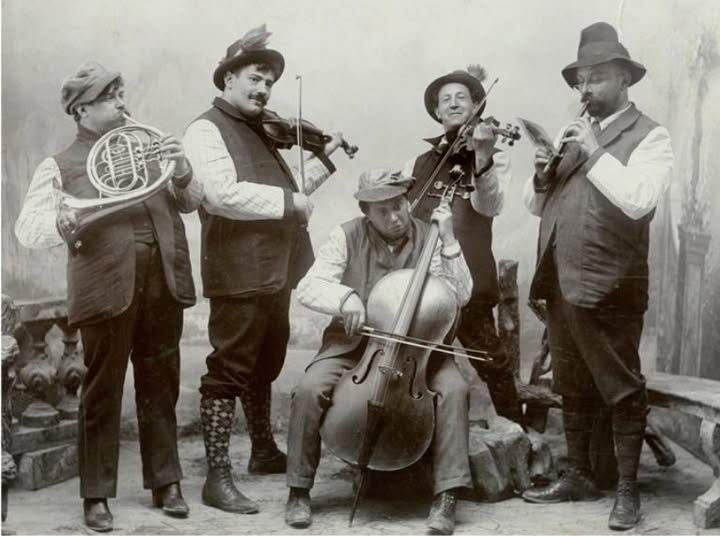
Fritz Kreisler on the violin and Arnold Schönberg on the cello (self-taught!) play the works of Johann Strauss in the Heurigen restaurants around Vienna. Photo: Arnold Schönberg Center Wien
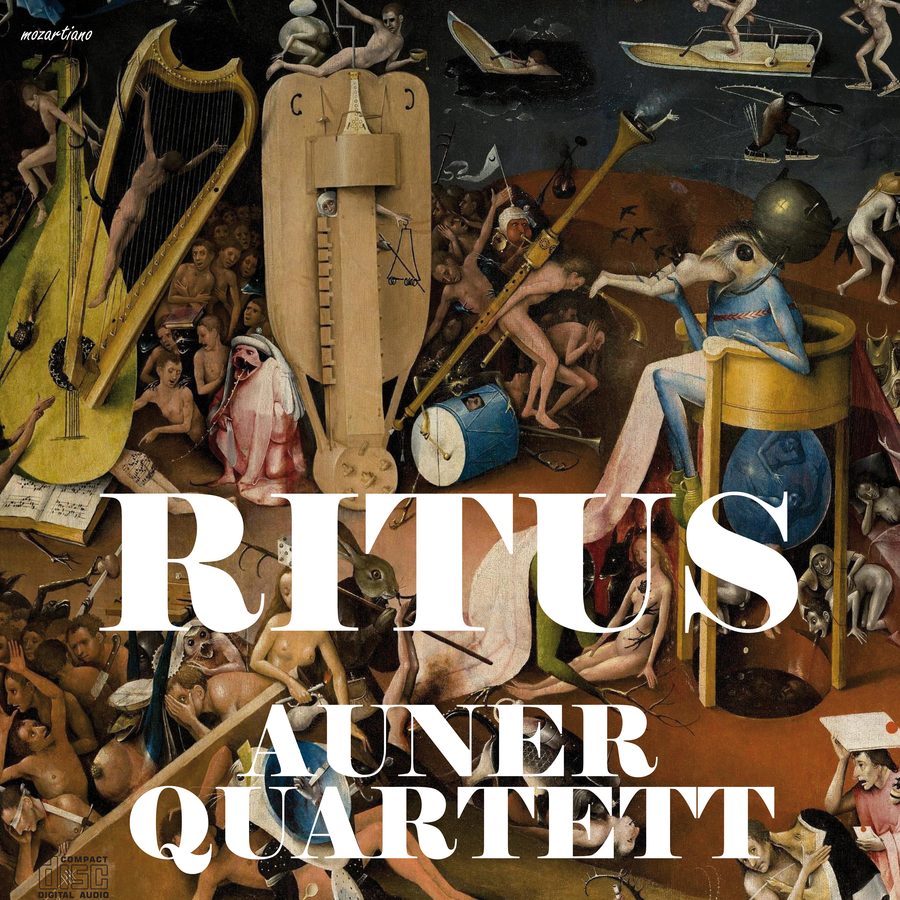
Ritus
RITUS – Music Between Time and Timelessness. Rituals are an essential part of human culture. They connect generations, create identity, and provide structure, while at the same time allowing space for change and reinvention. Music itself is a ritual – a moment of focus, a bridge to the past, and an opening toward the new. In this sense, the Auner Quartett presents its project “Ritus” as a sonic journey through different eras and cultures, where music plays a central role as a ritualistic practice.
At the heart of this program is the “Hymn to Nikkal”, the oldest known melody in human history, composed over 3,000 years ago in Ugarit (modern-day Syria). In this project, the hymn enters into a dialogue with Johann Sebastian Bach’s “The Art of Fugue”, one of the most complex works in Western music history. Counterpoint, the strictly organized interplay of voices, becomes a kind of musical ritual—its logical precision and emotional depth evoking a meditative quality.
The contemporary works composed for the Auner Quartett by Johanna Doderer, Konstantia Gourzi, Ruben Zahra, and Rainer Bischof explore the theme of ritual in diverse ways. They draw inspiration from ancient cultures, examine the power of repetition, or create sonic spaces that evoke trance-like states.
“Ritus” is more than a collection of pieces—it is an invitation to embrace music as something timeless. In a world often dominated by speed and constant movement, this program offers a moment of pause—a fermata of thought, a breath of reflection, where music can unfold its original, ritualistic power.
Beethoven in Vienna
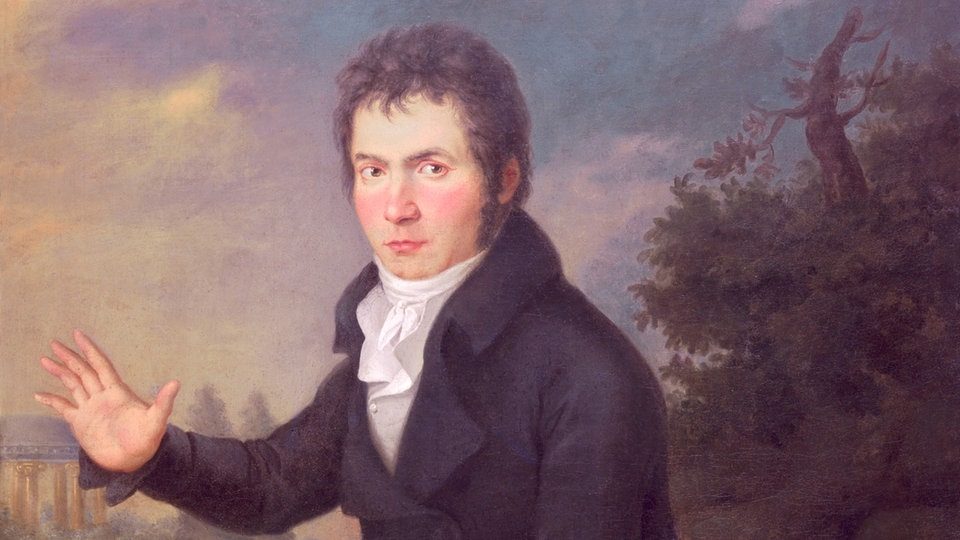
Vienna was much more than just a place of work for Beethoven—the city became the setting for his artistic friction, his human idiosyncrasies, and his radical musical renewal. Behind what are now monumental works lie numerous encounters, conflicts, and events that are still talked about in Vienna today.
The concert program focuses on these Viennese stories. Between the works, anecdotes and contemporary accounts of Beethoven’s life in the city are recounted: his arrival as a celebrated young pianist, improvising at receptions for the Viennese aristocracy; the legendary exchange with Joseph Haydn that led to the creation of the first string quartets; the famous episodes in which Beethoven left rehearsals and concerts because the tempos or interpretations did not meet his expectations; his restless life in numerous Viennese apartments and in his retreat in Mödling.
These stories open a complementary window onto the compositions: they show Beethoven as a person who challenged, inspired, and often overwhelmed those around him—and who, precisely through this intensity, created an unmistakable sound.
Mary Dickenson-Auner
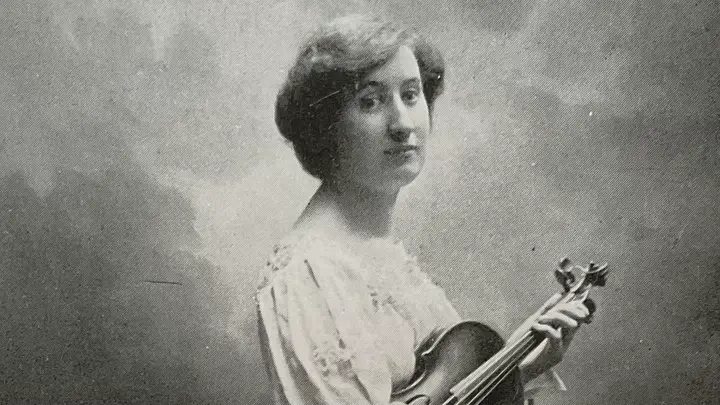
The Auner Quartett, named after the Viennese violinist and composer Mary Dickenson-Auner (1880–1965), later banned by the National Socialists and great-great-aunt of Daniel Auner, focuses its repertoire on works written in Vienna during her lifetime.
“A little four-year-old girl was asked: ‘What do you want to become?’ The prompt answer came: ‘A violin virtuoso!’ Where the child knew this word from, and what she thought it meant — that no one knows. But it was a prophecy.”
Born in Dublin on 24 October 1880, Mary Dickenson-Auner looked back in 1963 on an eventful and many-sided musical life. Her training took her to the Royal Academy of Music in London and finally to Prague to the legendary Otakar Ševčík. After a brilliant debut with the Czech Philharmonic she established herself in Berlin as a celebrated soloist and esteemed teacher.
In Vienna she became a central figure of the avant-garde: she was a member of Arnold Schönberg’s “Verein für musikalische Privataufführungen”. She worked closely with Béla Bartók, whose First Violin Sonata she premiered in Vienna in 1922. From 1925 she did pioneering work by establishing the so-called “Hörstunden” in Viennese primary schools.
In the late phase of her life her focus shifted increasingly to composition. Significant works were created, among them four symphonies, oratorios such as “Lux in Tenebris” and numerous chamber works, including four string quartets.
Her memoirs “Mein Musikleben”, written in Vienna in 1963, can be read here in full, in fourteen chapters: Mein Musikleben — the autobiography.
From the autobiography “A Life with the Violin”, published in “Women and Music in Ireland”, 2023.
Kammermusikforum Wien
The Kammermusikforum Wien is a non-profit cultural association based in Vienna. Its sole purpose is the organisation of the Auner Quartett’s concerts at the Wiener Musikverein. The association is an independent body and not part of the ensemble.
The series “Jenseits vom tanzenden Wien” is presented by the Kammermusikforum Wien and supported by the Alexander Zemlinsky Fund at the Gesellschaft der Musikfreunde in Wien.
Contact: Verein Kammermusikforum Wien, Daniel Auner, MA — info@danielauner.com