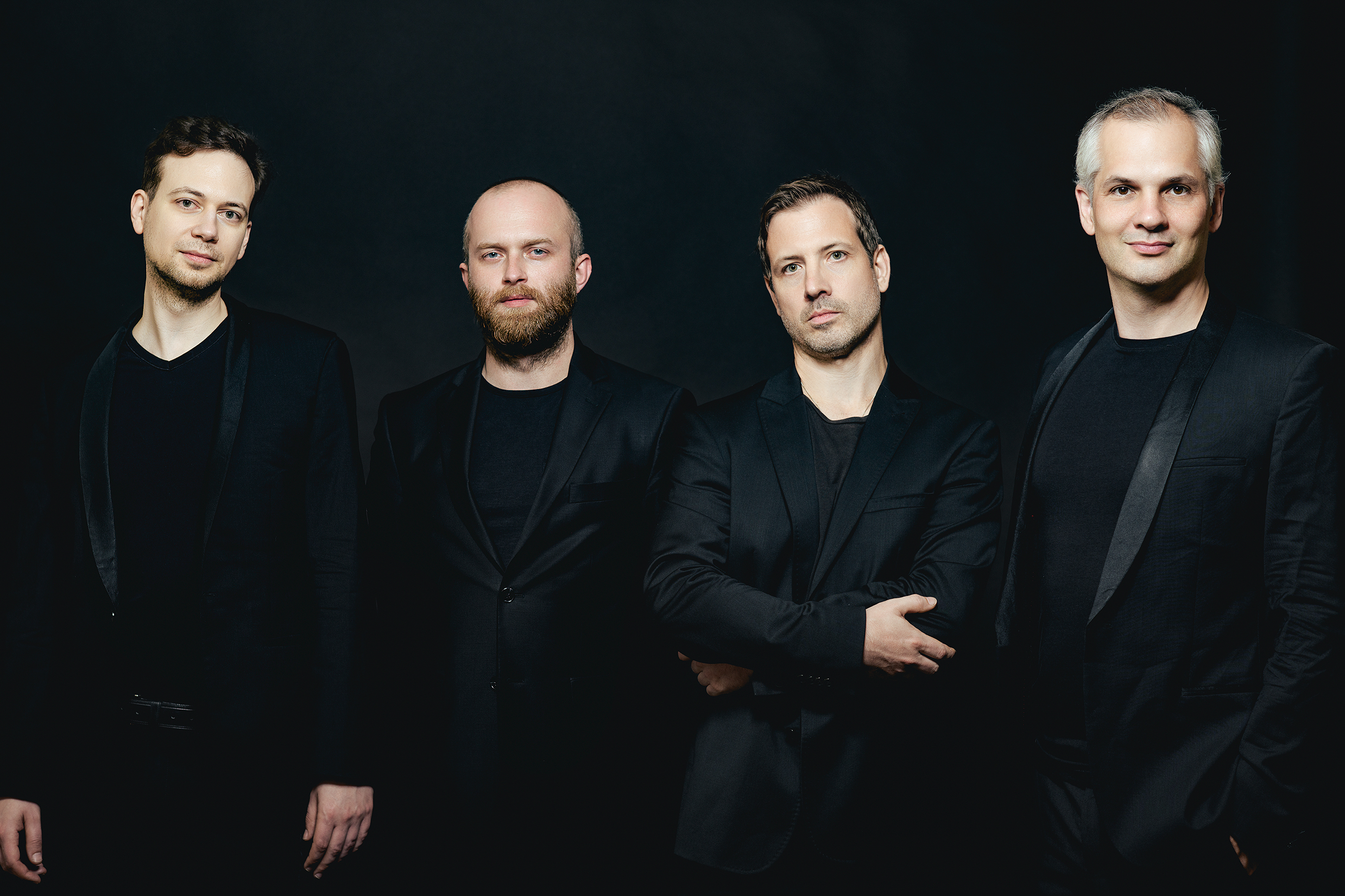
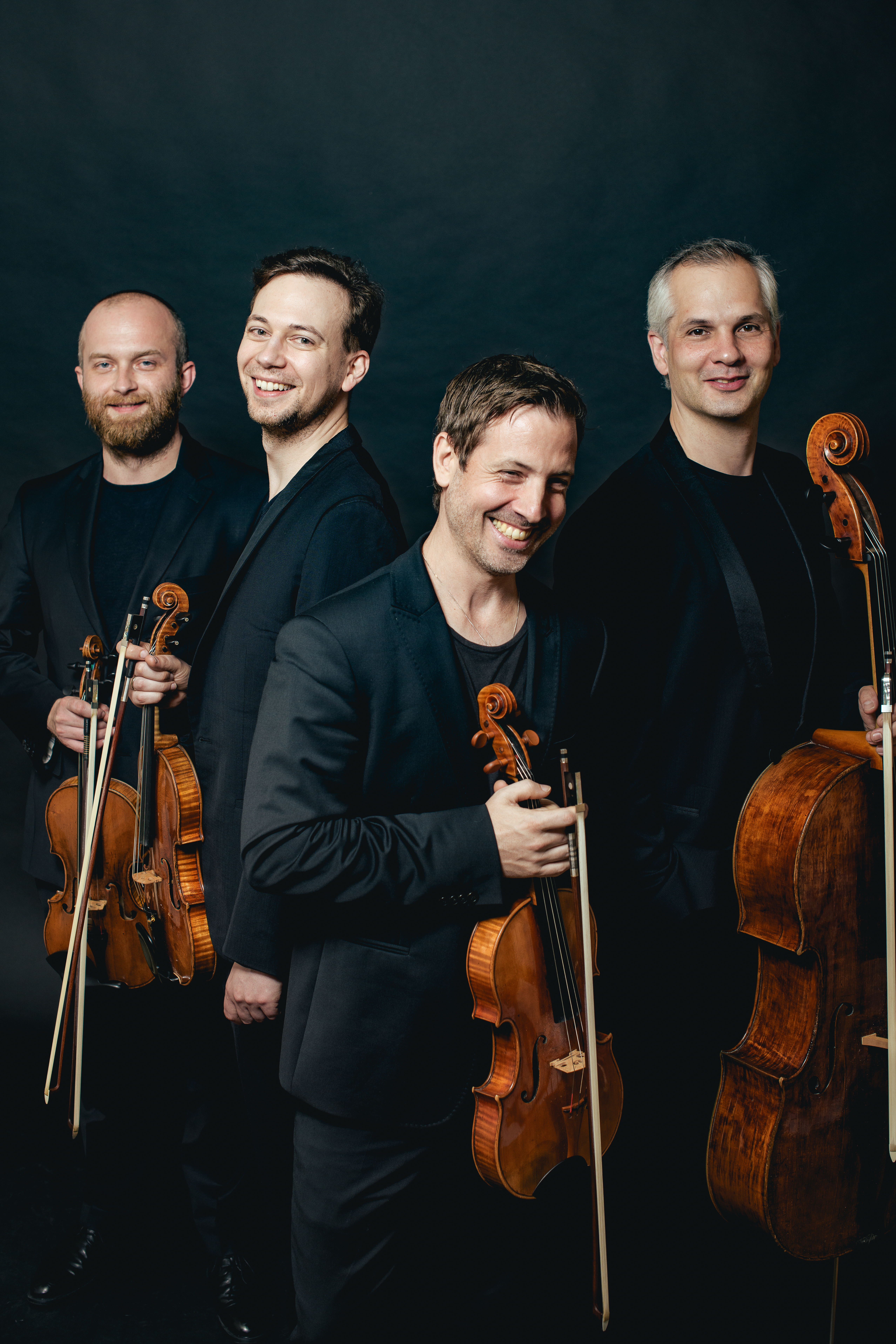
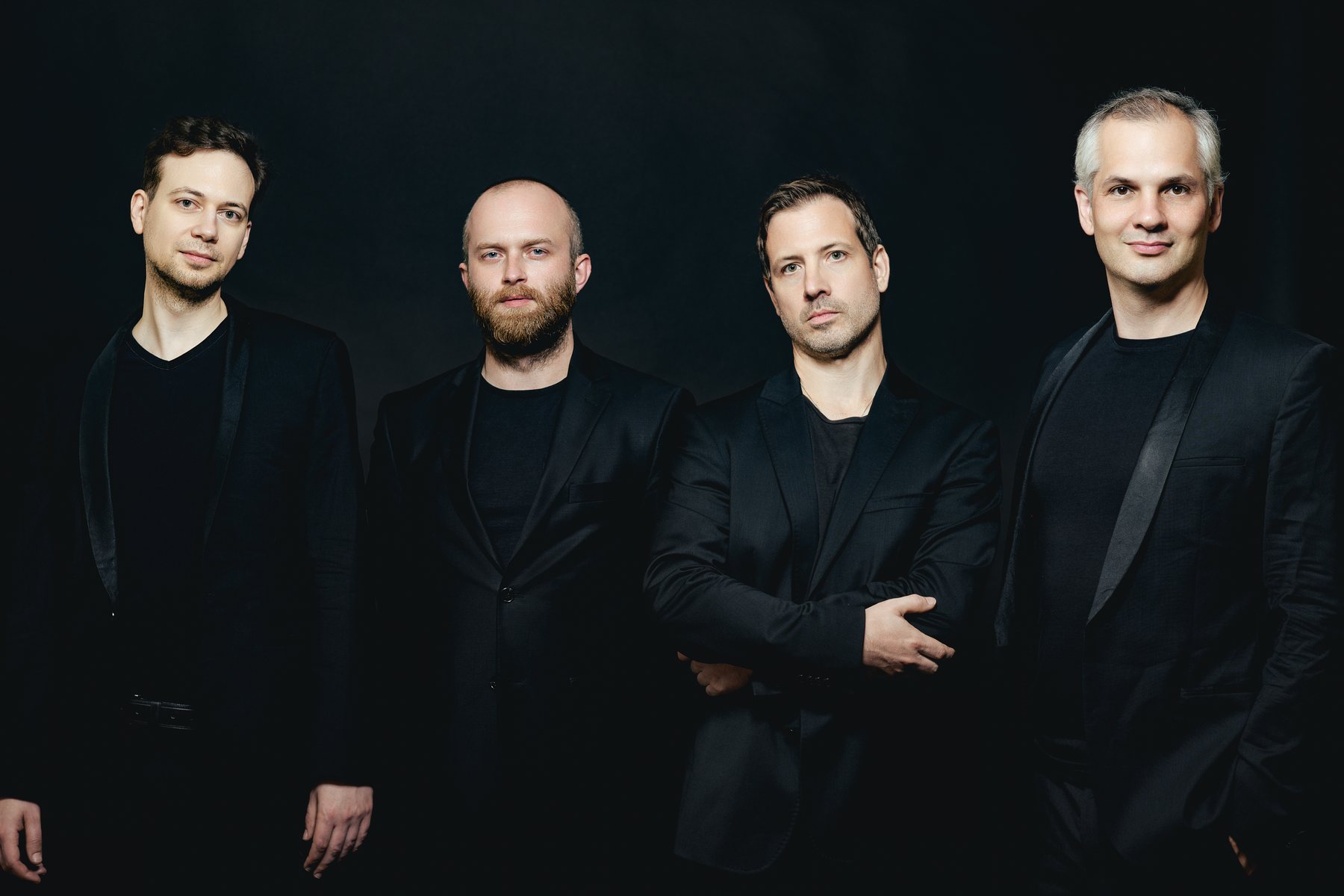
Auner Quartett

Press information


Press materials on the chamber music series “Jenseits vom tanzenden Wien” at the Wiener Musikverein, in three languages.

Press release · 1 September 2026

Dublin-born composer silenced by the Nazis returns to Vienna's Musikverein

Mary Dickenson-Auner's string quartets, unpublished for eighty years, open a four-concert cycle with baritone Thomas Hampson


She was born in Dublin, trained at the Royal Academy of Music in London, and built her career in Vienna. In 1938 Mary Dickenson-Auner (1880-1965) was banned from performing and teaching in the city she had made her home – because she held a British passport. Almost all her string quartets survive only in manuscript. For the first time, they are being made playable again.

From 25 November 2026, the Auner Quartett performs her Fourth String Quartet at the Vienna Musikverein, opening a cycle of four concerts titled "Jenseits vom tanzenden Wien" (Beyond Dancing Vienna). Daniel Auner, the quartet's first violinist and a relative of the composer, plays her own violin.

Her grandfather Hercules MacDonnell co-founded the Royal Irish Academy of Music. She studied under Émile Sauret in London and Otakar Ševčík in Prague, made her debut with the Czech Philharmonic in 1905, and in 1922 gave the Austrian premiere of Bartók's First Violin Sonata. Her early works appeared under a male pseudonym, Frank Donnell. Deprived of every public role in 1938, she began composing in earnest at almost sixty; the suppressed notes, she wrote, broke forth "like a tidal wave."

The cycle places her among contemporaries who shared her fate. Alexander Zemlinsky – teacher and brother-in-law of Arnold Schönberg – fled in 1938 and died in American exile in 1942. Egon Wellesz escaped to Oxford. Fritz Kreisler wrote his quartet "A Confession to Vienna" in New York exile. Baritone Thomas Hampson sings songs by these displaced composers on 17 March 2027.

"What a bold, exciting project," says Peter Marboe, former Vienna City Councillor for Culture and chairman of the Alexander Zemlinsky Fund, which supports the cycle.

Founded in 2013, the Auner Quartett won the Eugène Ysaÿe Competition in Liège in 2018 and was Austria's NASOM cultural ambassador in 2020/21.

Distributed via PRNewswire in Austria, Germany, Switzerland, the United Kingdom, Ireland and France. The text is free to use.

Background

Four topics

For each topic you will find the summary, the full text to read here, and the press document as a PDF — each including concert dates and contact persons.

Mary Dickenson-Auner (1880–1965)

An Irish violinist, composer and music educator who built her career in Vienna — and who is today largely forgotten. In her lifetime she stood as a soloist on the great podiums of Europe, worked with Bartók and Schönberg and created an extensive body of compositions. As a woman in a musical world dominated by men she had at times to publish under a male pseudonym; as a British citizen she was banned from performing and teaching under National Socialism. Thus gender, nationality and the events of history combined into a threefold silence.

In the first concert of the cycle (25 November 2026, Gläserner Saal) the Auner Quartett performs her Streichquartett Nr. 4 (String Quartet No. 4) ; the musicologist and long-standing Ö1 broadcaster Irene Suchy reads from her memoirs „Mein Musikleben" (My Life in Music). Daniel Auner, related to her through the family, plays on her own violin. Almost all of her string quartets survive only in manuscript and are currently being digitised by Dr Dima Khierbeck; the Auner Quartett plans a CD production of these works for autumn 2026. The transfer of her estate to the exil.arte Center of the mdw, coordinated by its director Gerold Gruber, is currently under way.

Read the full textShow less

A life against resistance

Mary Frances Dorothea Dickenson was born in Dublin in 1880, into a respected, musically and academically gifted family: her grandfather Hercules MacDonnell was a co-founder of the Royal Irish Academy of Music. She had to fight for her first violin lessons at the age of six; for a long time no one credited a girl with serious musical ambition. She studied at the Royal Academy of Music in London under Émile Sauret and then perfected her technique with Otakar Ševčík in Prague. In 1905 she made her debut under Oskar Nedbal with the Czech Philharmonic and went on to concert for around a decade as a soloist across Europe.

The pseudonym Frank Donnell

She published her early compositions under a male pseudonym — and precisely because they were taken for the work of a man, they found recognition. She describes this openly in her memoirs:

„Damals waren die Vorurteile gegen Kompositionen von Frauen noch viel größer als heutzutage. So versteckte ich mich hinter dem Namen Frank Donnell. Das brachte mir recht gute Kritiken, die ich sonst sicher nicht bekommen hätte. Aber später gab ich das Pseudonym auf, weil es mir feige vorkam, mich hinter den Männern zu verstecken." (At that time the prejudices against compositions by women were far greater than today. So I hid behind the name Frank Donnell. That brought me quite good reviews I would surely not have received otherwise. But later I gave up the pseudonym, because it seemed cowardly to me to hide behind the men.)

Mary Dickenson-Auner, „Mein Musikleben"

Vienna: Bartók, Schönberg and the avant-garde

In 1909 she moved to Vienna; in 1912 she married the scholar Michael Auner. After years in Transylvania and — owing to the war — in the Netherlands, the family returned to Vienna in 1920. Mary joined Arnold Schönberg’s „Society for Private Musical Performances". Her most significant interpretive contribution falls in this period: in 1922 she gave, with the pianist Eduard Steuermann, the Austrian premiere of Béla Bartók’s Violin Sonata No. 1. To prepare the Salzburg performance, Bartók stayed a week at her house in Neuwaldegg — „a fine, quiet man who liked to sit in the garden to work". Decades later Paul Hindemith, on meeting her again, remembered at once: „Salzburg, 1922, violin!"

The „Hörstunden": music education as a life’s work

From 1925, within the Vienna school reform, she developed her own educational concept: the „Hörstunden" (listening lessons), in which children were introduced through short, explained concerts to Haydn, Mozart, Schubert and Beethoven. On a voluntary basis she expanded the project to some 17 Viennese schools by 1938. Asked by an official what she herself gained from it, she replied simply: „Ich habe die Freude der Kinder." (I have the joy of the children.)

1938: the enforced silence

In March 1938 the life of the British citizen changed fundamentally. She describes the end of her school work soberly:

„Ein mir nicht gut gesinnter Lehrer verklagte mich bei der obersten Behörde, dass ich in die Schule beim Eintritt nicht mit ‚Heil Hitler‘ grüßte. Es wurde mir nahegelegt, mich entweder dem Gebrauch anzupassen oder mich zurückzuziehen. Als Engländerin zog ich das Letztere vor." (A teacher ill-disposed towards me denounced me to the highest authority for not greeting the school on entering with „Heil Hitler". I was advised either to conform to the custom or to withdraw. As an Englishwoman I chose the latter.)

Mary Dickenson-Auner, „Mein Musikleben"

As a foreign national she was forbidden to perform in public; she was no longer even allowed to give private lessons. At a stroke she lost every sphere of activity.

A body of work out of the silence

What began as loss she turned into the most creative period of her life. At almost sixty, deprived of every public role, she began to compose in earnest — the long-suppressed notes broke forth, as she herself wrote, „wie eine Flutwelle" (like a tidal wave). Over some two decades an extensive body of work arose: symphonies, operas, oratorios, songs and chamber music. Instead of the „old triad music" she systematically used four-, five- and six-note chords, wrote emphatically polyphonically and returned again and again to the Irish folk tunes of her childhood — a combination she herself called „Celtic Impressionism". She died in Vienna in 1965.

The theme throughout the whole cycle

The rediscovery of suppressed and forgotten voices runs through all four evenings. In the first concert (25 November 2026) Dickenson-Auner’s String Quartet No. 4 stands beside Schubert, Brahms and Zemlinsky. In the second (17 February 2027) Webern’s slow movement and Berg’s „Lyric Suite" meet the Emperor Waltz. The third (17 March 2027) with Thomas Hampson gathers, under the title „a bouquet of songs", works by Zemlinsky, Mary Dickenson-Auner and others often driven into exile. The fourth (22 May 2027) closes with Fritz Kreisler’s „A Confession to Vienna". Mary Dickenson-Auner is thus not merely one item on one evening, but the dramaturgical centre of the entire cycle.
Forbidden Music under National Socialism

The cycle „Jenseits vom tanzenden Wien" also brings to the fore composers whose work was suppressed, banned or driven into exile during the Nazi regime. While Nazi propaganda deployed the music of Johann Strauss as „German", popular entertainment — culminating in the first New Year’s Concert of the Vienna Philharmonic, begun in 1939 — most of the composers performed here had to struggle for their survival: Zemlinsky, Schönberg and Kreisler fled to the USA, Wellesz to England; Webern, branded a „cultural Bolshevist", remained in inner emigration and was killed in 1945. Mary Dickenson-Auner, a British citizen, was banned from performing.

The second concert (17 February 2027, Gläserner Saal) sets two worlds side by side: the old, dancing Vienna and the music that sought to break free from it. Wolfgang Böck , one of Austria’s most distinctive character actors, reads reflections on Arthur Schnitzler’s „Leutnant Gustl", formulated by Manfred Stimmler. The musical close is Alban Berg’s „Lyric Suite" — a work dedicated to Zemlinsky that conceals a secret programme.

Read the full textShow less

The Vienna of the displaced

From 1933 in Germany and 1938 in Austria, the Nazi regime persecuted musicians on racial and political grounds. Works by Jewish composers and by modernism were defamed as „degenerate" and removed from concert life. For Vienna, the „Anschluss" of 1938 meant a deep rupture in a musical life that had previously been internationally leading; the expulsions tore apart artistic networks built over decades — from the Second Viennese School to the chamber-music circles.

The ostracised composers throughout the whole cycle

The theme is spread across all four evenings. Anton von Webern — killed in Mittersill in 1945 by the bullet of an American soldier — opens the second concert with his slow movement. Alban Berg embodies modernism there with the „Lyric Suite". Arnold Schönberg appears in the third concert with his early string quartet, Egon Wellesz — who fled to England in 1938 — and Fritz Kreisler — who emigrated to the USA in 1939 — in the fourth. Alexander Zemlinsky , expelled in 1938 and dead in exile in 1942, is present as the axis of the cycle in every concert. Mary Dickenson-Auner , banned from performing as a British citizen, opens the cycle in the first concert.

The Emperor Waltz — and its appropriation

At the centre stands the Kaiserwalzer (Emperor Waltz) of Johann Strauss, in the quartet’s arrangement: the dancing Vienna in its original form. Its apparent harmlessness was later instrumentalised by Nazi propaganda, which used Strauss to distract people from the horrors of the war — and for which it falsified the composer’s genealogy. It is precisely this contrast — appropriated light music beside suppressed modernism — that is the theme of the evening.

Berg’s „Lyric Suite" — a secret programme

Berg’s masterpiece of 1925/26 is officially dedicated to Alexander Zemlinsky and quotes from his „Lyric Symphony". At the same time it conceals a secret programme and the encoded initials of a forbidden love. Twelve-tone technique and glowing expressivity merge into one of the most compelling quartets of modernism. The Auner Quartett studied this work with Günter Pichler, first violinist of the Alban Berg Quartet — as one of the last ensembles with whom Pichler worked on the „Lyric Suite" before his death in spring 2026, revealing to them its hidden symbolism.

Schnitzler’s „Leutnant Gustl"

Arthur Schnitzler’s interior monologue „Leutnant Gustl" — the first interior monologue in German-language literature — dissects the codes of honour of old Vienna. As an ironic look at the society whose façade the cycle questions, it forms the literary frame of the evening.

exil.arte as the specialist point of reference

The exil.arte Center of the mdw collects, researches and presents the estates of composers whose work was banned under National Socialism. In 2026 the Center marks its double anniversary, accompanied by a media partnership with ORF Radio Ö1.

The Alexander Zemlinsky Fund

Alexander Zemlinsky (1871–1942) is the musical axis of the cycle — a work of his sounds in each of the four concerts. The fund named after him, the Alexander Zemlinsky Fund at the Gesellschaft der Musikfreunde in Wien, supports the cycle financially. Zemlinsky was the teacher, friend and — through Schönberg’s marriage to his sister Mathilde in 1901 — brother-in-law of Arnold Schönberg; together they founded the Society of Creative Musicians in 1904. Forced to flee in 1938, he died in American exile in 1942, all but forgotten.

In the third concert (17 March 2027, Brahms-Saal) Thomas Hampson, baritone , takes centre stage: one of the foremost song interpreters of our time devotes himself to a bouquet of songs from the era of Zemlinsky to Mary Dickenson-Auner and Julius Bürger — composers of the exile who emigrated to the USA. A statement by Peter Marboe, chairman of the fund, is reproduced in full below.

Read the full textShow less

Who was Alexander Zemlinsky

Alexander Zemlinsky, born in Vienna in 1871, was a composer, conductor and teacher — a key figure in the transition from late Romanticism to modernism. As conductor of the amateur orchestra „Polyhymnia" he met the young Arnold Schönberg around 1895, the only person to whom he ever gave formal composition lessons. In 1901 Schönberg married Zemlinsky’s sister Mathilde — making Zemlinsky his brother-in-law. In 1904 the two founded the „Society of Creative Musicians" with Gustav Mahler as honorary president. Alban Berg and Anton Webern also belonged to his circle; Berg dedicated the „Lyric Suite" to him.

After posts at the Vienna Volksoper, in Prague and Berlin, Zemlinsky fled the Nazi regime to Vienna in 1933 and to the USA in 1938. There, unlike the celebrated Schönberg, he remained largely unnoticed; after several strokes his creative work fell silent. He died in American exile in 1942 — his rediscovery began only in the 1970s. This fate of falling silent and of late return underlies the whole cycle.

The fund: founding, purpose, committee

The Alexander Zemlinsky Fund at the Gesellschaft der Musikfreunde in Wien was established in 1989 by Louise Zemlinsky, the composer’s widow; after her death in 1992 all rights to his works passed to the fund. Its purpose is to promote and disseminate Zemlinsky’s work, to support research and the source-critical edition of his compositions. The committee is chaired by Dr Peter Marboe, former Vienna City Councillor for Culture and director of the Mozart Year 2006. Since 1996 the fund has awarded the Alexander Zemlinsky Prize.

Zemlinsky in every concert

A work by the composer is featured on each evening: the String Quartet No. 1 in A major op. 4 (25 November), the early String Quartet in E minor of 1893 (17 February), a bouquet of songs with Thomas Hampson (17 March) and Two Movements for String Quartet (22 May). The Auner Quartett was awarded „Ö1 CD of the Year 2022" for its recording „Versinkende Sonne" (Zemlinsky, Wellesz, Webern, Kreisler).

The third concert: Wolf, Schönberg, Hampson

The evening in the Brahms-Saal opens with Hugo Wolf’s cheerful rondo „Italian Serenade" and Arnold Schönberg’s youthful String Quartet in D major of 1897 — written still entirely under the impression of Brahms and Dvořák, and with the advice of his friend and later brother-in-law Zemlinsky. At its centre stands the song recital of Thomas Hampson: works by Zemlinsky alongside those of Mary Dickenson-Auner, Julius Bürger and other composers who emigrated to the USA before National Socialism — the evening thus becomes a homage to a displaced musical culture.

Statement by Peter Marboe

Peter Marboe is chairman of the Alexander Zemlinsky Fund at the Gesellschaft der Musikfreunde in Wien. The former Vienna City Councillor for Culture and director of the Mozart Year 2006 comments on the cycle as follows (original German, with English translation):

„Was für ein kühnes, spannendes Projekt, in dem das bekannte Auner Quartett – wieder einmal – Neues erkunden und einen großen Bogen jenseits bekannter Wiener Klischees spannen will. Von Schubert, Brahms, Johann Strauss und Hugo Wolf über Webern, Berg und Schönberg bis zu Egon Wellesz und Fritz Kreisler. Und mittendrin Alexander Zemlinsky als zentrale Figur des Zyklus und der Wiener Moderne. Dazu fast möchte man sagen, mit seiner Hilfe – war Zemlinsky nach dem Krieg doch selbst ein viele Jahrzehnte Vergessener – die Wiederentdeckung einer zu Unrecht in Vergessenheit geratenen Komponistin und bedeutenden Persönlichkeit des Wiener Musiklebens, Mary Dickenson-Auner. Und das im Musikverein. Dem Ort, der sich von Anfang an Entdeckungen und Wiederentdeckungen wichtiger Werke zur Aufgabe gemacht hat. Bleibt nur, viel Erfolg zu wünschen, und zu hoffen, dass das junge, so engagierte Ensemble auf seiner Entdeckungsreise „Jenseits vom tanzenden Wien" von einem möglichst großen und interessierten Publikum begleitet wird." (What a bold, exciting project, in which the renowned Auner Quartett sets out – once again – to explore new ground and to trace a wide arc beyond the familiar Viennese clichés. From Schubert, Brahms, Johann Strauss and Hugo Wolf, through Webern, Berg and Schönberg, to Egon Wellesz and Fritz Kreisler. And at its centre Alexander Zemlinsky as the central figure of the cycle and of Viennese modernism. And with his help, one might almost say – for after the war Zemlinsky was himself forgotten for many decades – the rediscovery of a composer and important figure of Viennese musical life unjustly fallen into oblivion: Mary Dickenson-Auner. And all this in the Musikverein. The place that has made it its task from the very beginning to discover and rediscover important works. It only remains to wish them every success, and to hope that this young, so dedicated ensemble will be accompanied on its voyage of discovery „Jenseits vom tanzenden Wien" by the largest and most interested audience possible.) — Peter Marboe, chairman of the Alexander Zemlinsky Fund at the Gesellschaft der Musikfreunde in Wien

Mary Dickenson-Auner’s Violin

Throughout the cycle Daniel Auner plays on the violin from the estate of Mary Dickenson-Auner, the so-called Fisselthaler instrument. Outwardly it is a German factory violin with a material value of less than a hundred euros — yet its sound matches that of far more valuable instruments, and to this day no one can explain why. The violin maker Hermann Löschberger, who restored it, found no visible interventions. The name goes back to Karl Fisselthaler, whom the composer describes in her memoirs as a mysterious „sound refiner"; externally he cannot be verified.

The fourth concert (22 May 2027, Gläserner Saal) focuses on Fritz Kreisler and his String Quartet „A Confession to Vienna"; the dramaturge and presenter Christoph Wagner-Trenkwitz speaks about the Vienna that Kreisler left behind.

Read the full textShow less

A sound no one can explain

Outwardly the instrument is unremarkable: a German factory violin, one of thousands, with a material value of less than a hundred euros. Yet its sound stands in sharp contradiction to this — it matches that of far more valuable instruments. The violin was restored by the maker Hermann Löschberger; at Thomastik-Infeld, strings were selected especially for it. Löschberger found no visible interventions during the restoration — no grooves in the wood, no glass dust, unremarkable plate thicknesses. Where the sound comes from cannot be explained with today’s understanding.

Karl Fisselthaler, the sound refiner

The name of the instrument goes back to Karl Fisselthaler, whom Mary Dickenson-Auner met after her return to Vienna and describes as a „peculiar and interesting person". Her very first characterisation is telling:

„Man konnte ihn nicht einen Geigenbauer nennen, denn er baute die Geige nicht selbst, sondern ließ sie nach seinen Angaben bauen oder kaufte ganz billige Geigen, die er dann zum Klingen brachte — und zwar war sein Bestreben, dass sie ebenso gut klingen sollten wie die beste Stradivari-Geige." (One could not call him a violin maker, for he did not build the violin himself, but had it built to his specifications or bought very cheap violins, which he then made sing — his aim being that they should sound just as good as the finest Stradivari.)

Mary Dickenson-Auner, „Mein Musikleben"

What he did to the violins he kept strictly secret; the method was lost with his death. Of the violin she finally kept she writes:

„… bis er mir einmal eine so schöne, wohlklingende Geige brachte, die ich behalten durfte und auf der ich dann immer öffentlich spielte. Ich behauptete, dass sie von selbst spielte, so leicht sprach sie an, und so leicht spielte sie sich." (… until one day he brought me such a beautiful, resonant violin, which I was allowed to keep and on which I then always played in public. I claimed that it played by itself, so easily did it respond, and so easily did it play.)

Mary Dickenson-Auner, „Mein Musikleben"

Externally Fisselthaler cannot be verified: his name appears neither in the relevant violin-making directories nor in the research on the composer. His work survives solely through her memoirs.

A shopping bag from Spar

One anecdote belongs to the history of the instrument: at the first performance of Mary Dickenson-Auner’s Streichquartett Nr. 3 (String Quartet No. 3) , Daniel Auner’s uncle, Andreas Auner, brought the violin to the concert in a shopping bag of the Spar supermarket chain — at the time it was completely broken. For the family this was a great disappointment: the composer had always considered the instrument fantastic, while the violin makers assigned it only a modest value. It was the restoration by Hermann Löschberger that made the violin playable again — and once more revealed that sound which bears no relation to its material worth.

Fritz Kreisler and „A Confession to Vienna"

The fourth concert is devoted to Fritz Kreisler. His String Quartet in A minor, written in New York exile in 1919, bears the subtitle „A Confession to Vienna" — a late-Romantic masterpiece in which the exile raises a sounding monument to the city of his youth. In his apartment in the USA his Austrian certificate of citizenship hung framed on the wall; in the First World War he had volunteered. Daniel Auner has recorded numerous works by Kreisler and was involved in organising the most recent Fritz Kreisler Competition in Vienna.

One instrument throughout the whole cycle

The Fisselthaler violin is not confined to a single evening: Daniel Auner plays it throughout the entire cycle — from the composer’s String Quartet No. 4 in the first concert, through the works of Zemlinsky, Webern and Berg, to Kreisler’s „A Confession to Vienna" in the finale. The instrument thus binds the four evenings together and creates a direct, sounding connection between the composer and today’s ensemble.

Download

Press photos

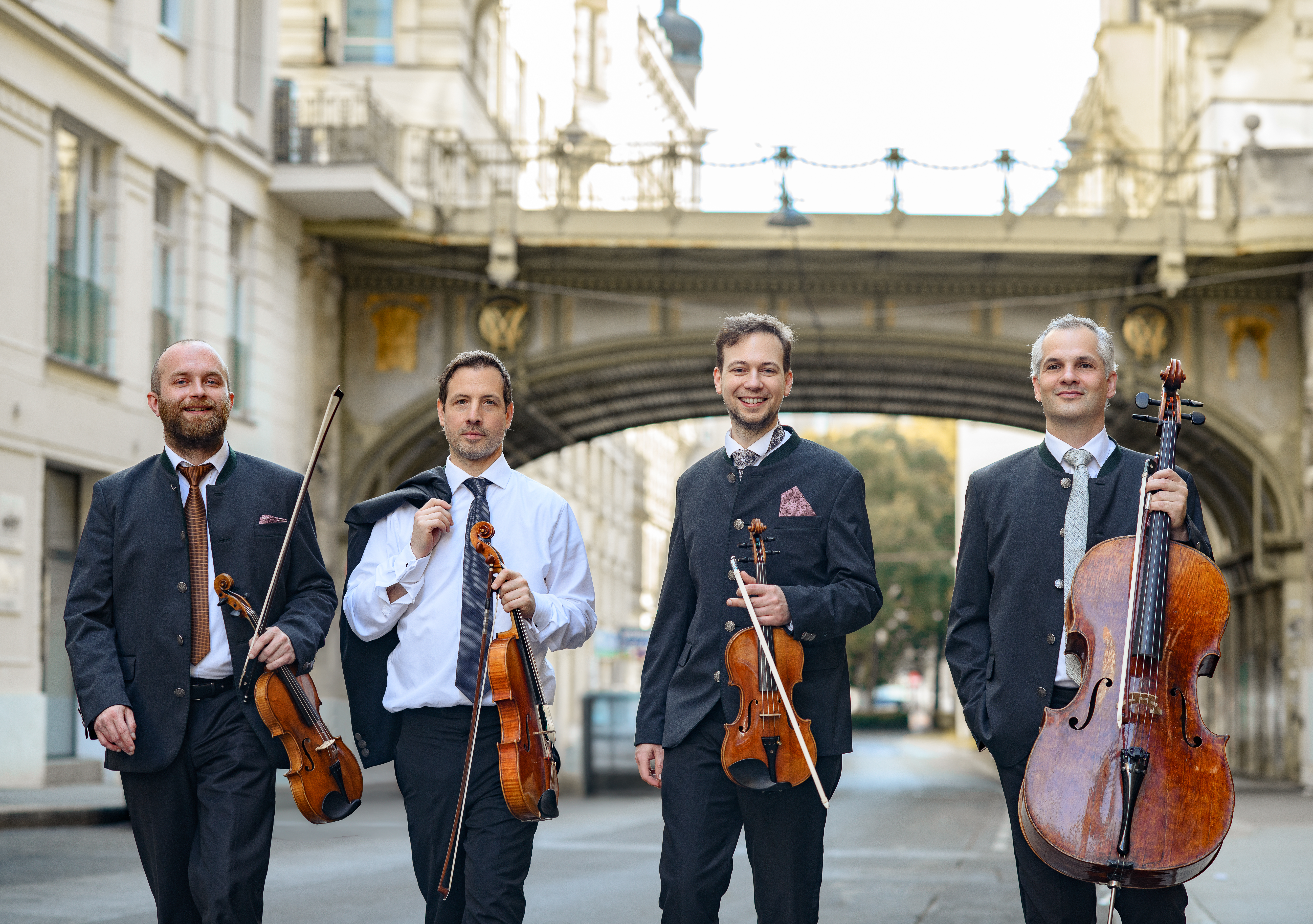
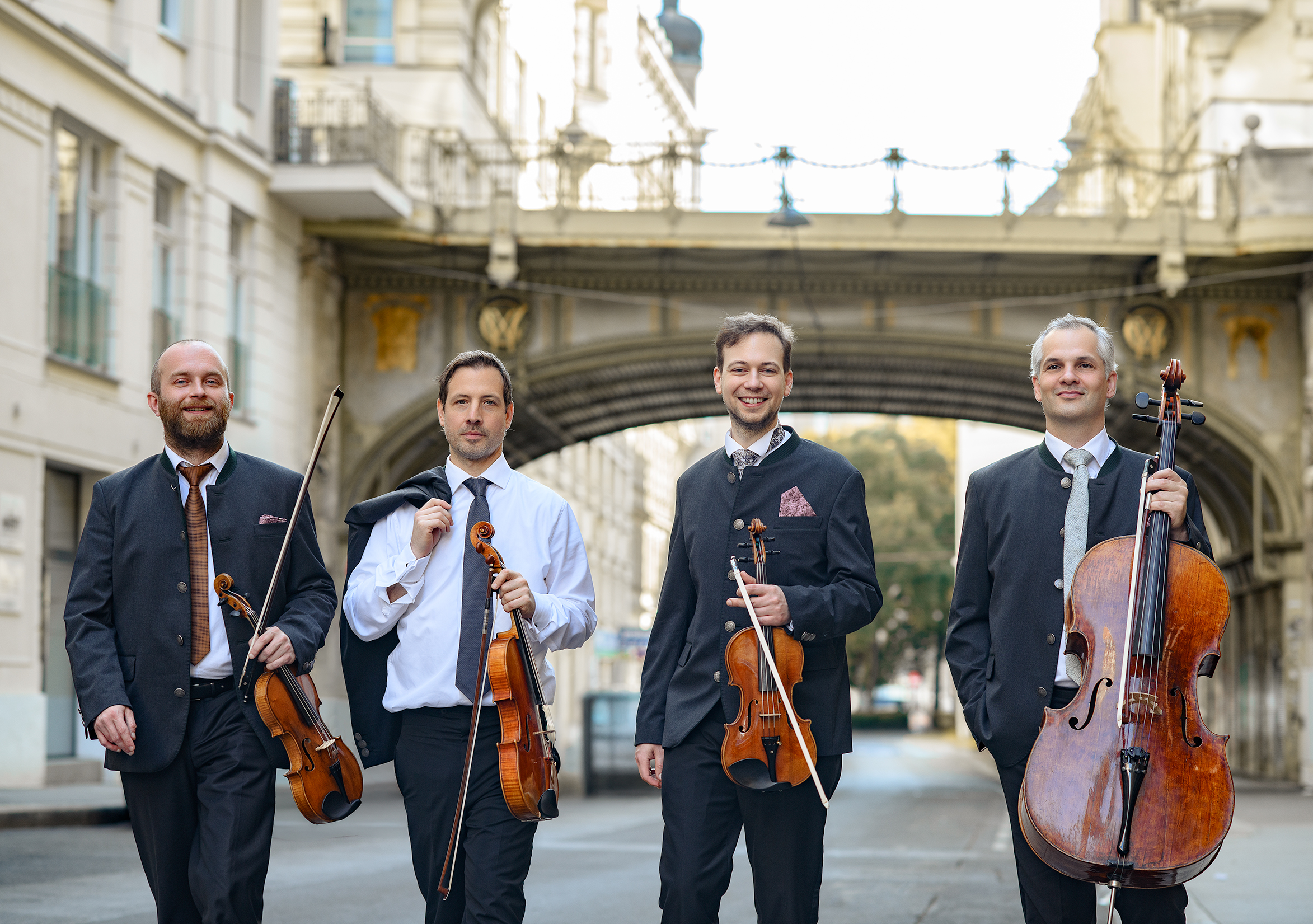
Auner Quartett · Vienna Musikverein

OriginalJPG · 7819 × 5504 · 30 MB

WebJPG · 2346 × 1651 · 2.4 MB

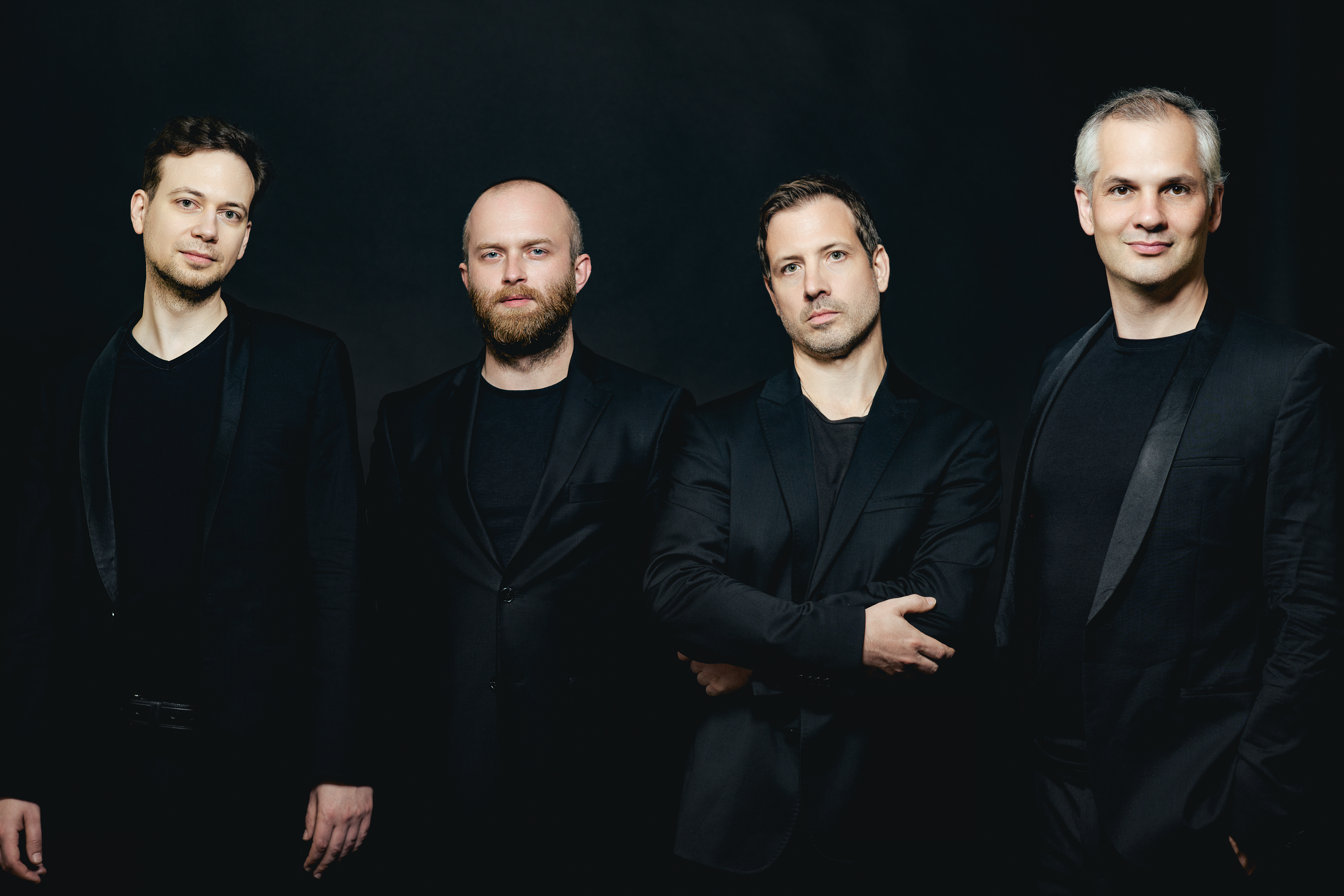
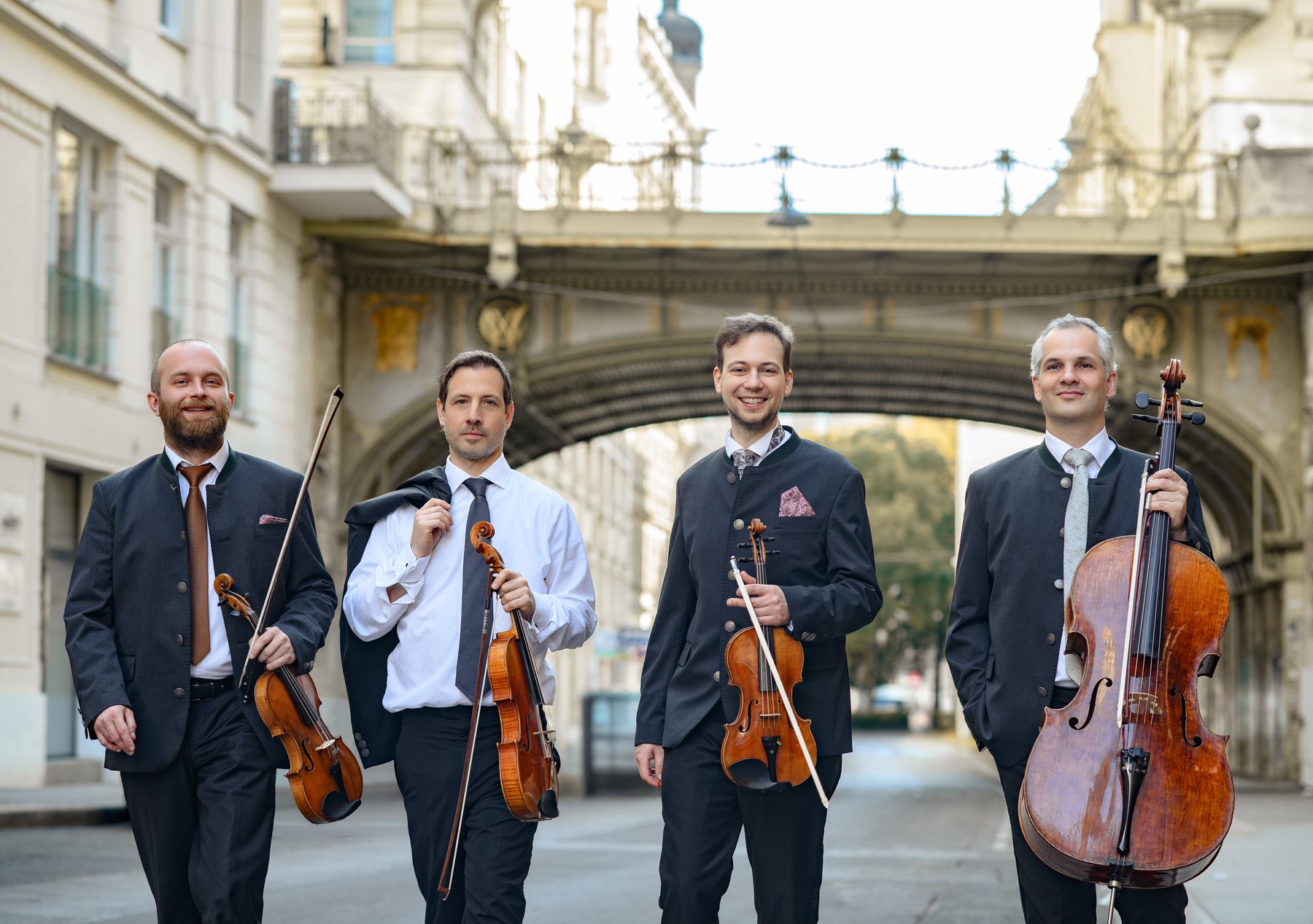
Auner Quartett · portrait

OriginalJPG · 8256 × 5504 · 30 MB

WebJPG · 2477 × 1651 · 2.1 MB

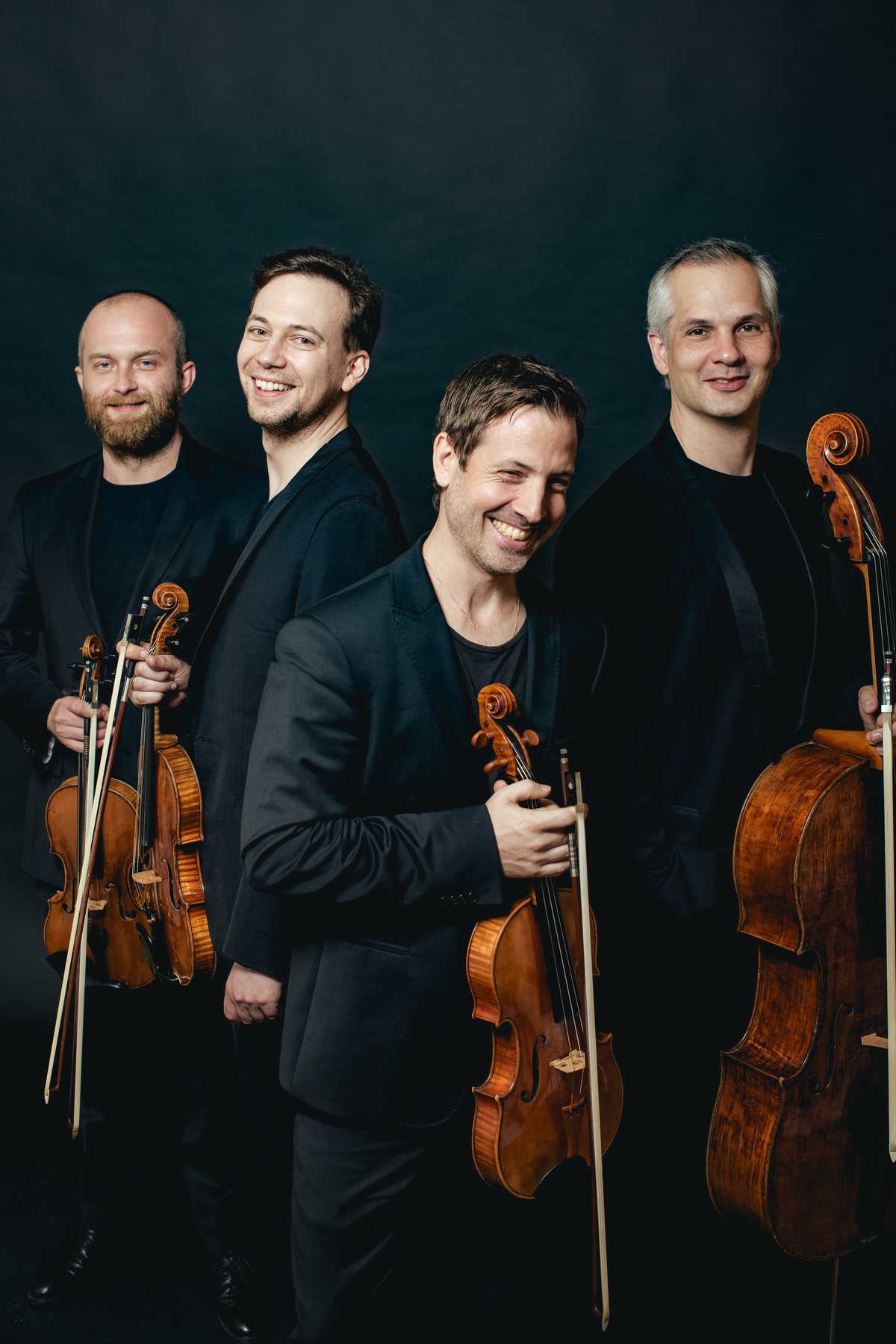
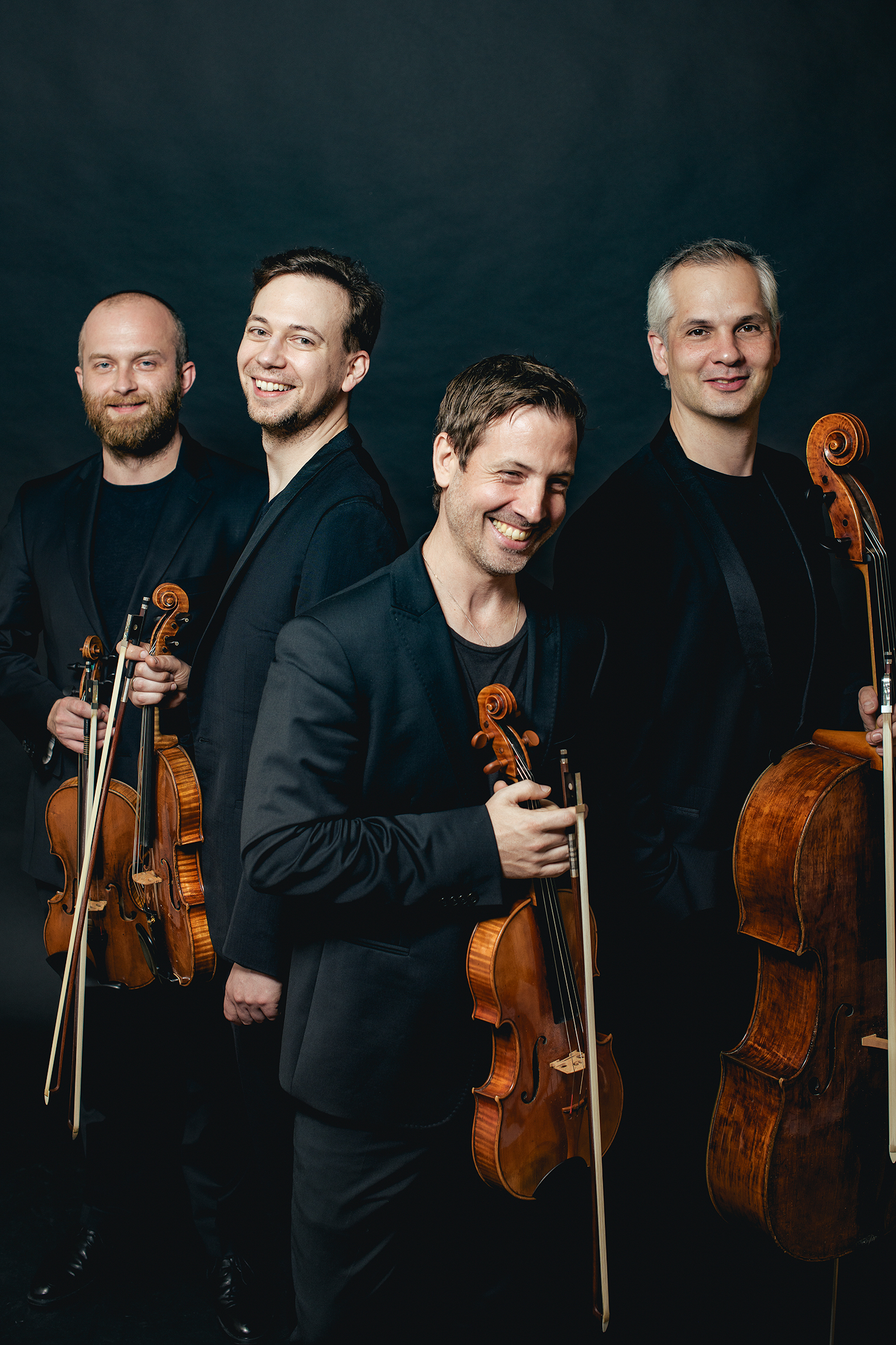
Auner Quartett · with instruments

OriginalJPG · 5111 × 7666 · 25 MB

WebJPG · 1533 × 2300 · 2.4 MB

Photos: Damián Posse. Free of charge for reporting on the Auner Quartett, with credit to the photographer.

Information & contact

Press contact

Kammermusikforum Wien
Daniel Auner, MA
info@danielauner.com
+43 677 63513039

For further information, for the verification of statements and for possible interviews, contact persons are available — among them Daniel Auner (primarius), Dr Andreas Auner (grandson of the composer), Prof. Dr Gerold Gruber (Exilarte Center of the mdw), Josipa Sipek (Exilarte Center of the mdw), Erin Hennessey (Royal Academy of Music) and the guests of the series. Direct contacts can be requested through the Kammermusikforum Wien.